Side effects
The Wegovy pill and heart rate
The label reports a small rise in resting heart rate, 1 to 4 beats per minute on average with the injection, and says the findings were similar in the tablet trial. One person in four had a rise of 20 beats or more at some visit, against one in six on placebo. The label asks prescribers to monitor heart rate and patients to report palpitations.
The Oolite team, from the FDA labels
Sources checked Oct 27, 2026
Published Oct 18, 2026
Updated Oct 27, 2026 · 2 min read
The short answer
The label reports a small rise in resting heart rate, 1 to 4 beats per minute on average with the injection, and says the findings were similar in the tablet trial. One person in four had a rise of 20 beats or more at some visit, against one in six on placebo. The label asks prescribers to monitor heart rate and patients to report palpitations.
What the label says
The warnings section has a paragraph for it.
From the labelTreatment with WEGOVY was associated with increases in resting heart rate. Mean increases in resting heart rate of 1 to 4 beats per minute (bpm) were observed in WEGOVY injection-treated adult patients compared to placebo in clinical trials for weight reduction.
Then the spread: more people on the drug than on placebo had, at some visit, a rise of 10 to 19 beats (41 against 34 percent) or of 20 beats or more (26 against 16 percent). And the sentence that brings it to the tablet:
From the labelFindings were similar in a trial with the WEGOVY tablets.
What the label asks for
Two things. Prescribers are to monitor heart rate at regular intervals, as in usual practice. Patients are to tell their provider about palpitations or a racing heartbeat while on the drug. And the label is direct about a rise that lasts:
From the labelIf patients experience a sustained increase in resting heart rate, discontinue WEGOVY.
That is a decision for the prescriber, who sees the readings over time, not a reason to skip a tablet on your own.
What people actually do
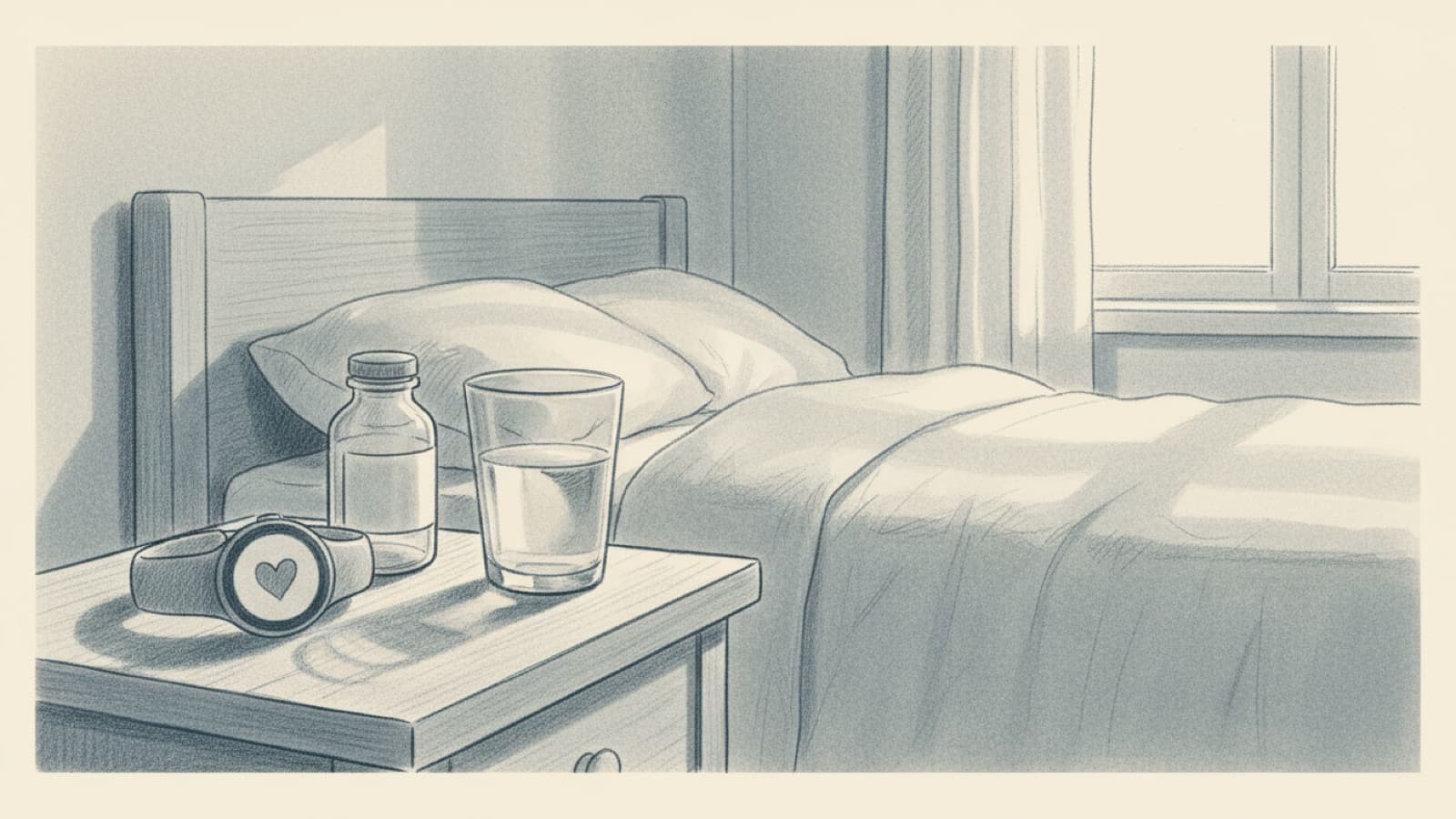
Watches made this the effect people notice earliest: a resting pulse in the 60s that becomes the 70s in the first weeks, seen on a wrist every morning. The forums treat it as expected, and the label agrees, up to a point. What people describe as unsettling is the occasional pounding heart in the evening or at night, and that is the thing the label asks you to report.
The confounders people mention are the ones on every other page: too little water, too little food, a bad night. The dehydration warning in the Medication Guide points the same way.
Oolite does not read heart rate. Its journal keeps how the day felt, so that a symptom that repeats is a dated line at the appointment, next to the number from the watch.
Questions people ask
How big is the rise?
On average, 1 to 4 beats per minute at rest with the injection, and the label says the tablet trial found similar results. At any single visit, 41 percent of people had a rise of 10 to 19 beats against 34 percent on placebo, and 26 percent had 20 or more against 16 percent.
Is that dangerous?
The label does not call the average rise dangerous. It asks for heart rate to be monitored at regular intervals and for palpitations or a racing heartbeat to be reported. If the rise at rest is sustained, the label says to stop the medicine. That decision is made with the prescriber.
My watch says my resting pulse is up five beats. Is that the pill?
It is inside what the label describes. It is worth a mention at the next appointment, and a call sooner if it keeps climbing or comes with palpitations.
Does the rise go away if I stop?
The label does not describe the course after stopping. It does say semaglutide is still present five to seven weeks after the last tablet.
Sources
- Wegovy prescribing information, Novo Nordisk, §5.9, revised 06/2026 · Mean increases in resting heart rate of 1 to 4 bpm; maximum changes of 10 to 19 bpm in 41 vs 34 percent and 20 bpm or more in 26 vs 16 percent; findings similar with the tablets; monitor heart rate; instruct patients to report palpitations; discontinue if the increase in resting heart rate is sustained.
Sources checked Oct 27, 2026. This page is information, not medical advice: read the medical disclaimer, and talk to your prescriber or pharmacist about your own treatment.
Written by
The Oolite team, from the FDA labels
We make Oolite. Every answer starts from the FDA prescribing information, quoted word for word, and is rewritten when a label changes.
How these pages are madeOolite
The GLP-1 tracker for the pill and the shot.
The 30 minute timer, your shot day, the level chart and the dose reminder, on iPhone, with Apple Watch to log. Free to download, then a 14-day free trial.